Internet & Connectivity · 4 min read
The Reality of Getting Fast Fibre Broadbandin the Cotswolds
One of the first questions people ask when moving to the Cotswolds is, "What's the internet like?" The good news is that many villages now have access to high-speed fibre broadband. The less good news is that getting it installed isn't always as simple as plugging in a router.
If you're happy with download speeds under around 50Mbps, traditional broadband services may be sufficient. However, if you work from home, stream lots of content, have multiple users in the house, or simply want a future-proof connection, you'll almost certainly want a full fibre service.
In many Cotswold villages, BT/Openreach fibre is available, but in a large number of rural locations the primary provider is Gigaclear, which has invested heavily in bringing full fibre to smaller communities.
How does fibre actually get to your house?
Unlike older broadband services that use the existing copper telephone network, full fibre requires a physical fibre optic cable to be run all the way to your property.
This cable is connected from the nearest POT (Point of Termination). In simple terms, this is the access point on the fibre network closest to your home. It may be located in a small underground chamber, roadside box, pavement access point or pole serving nearby properties.
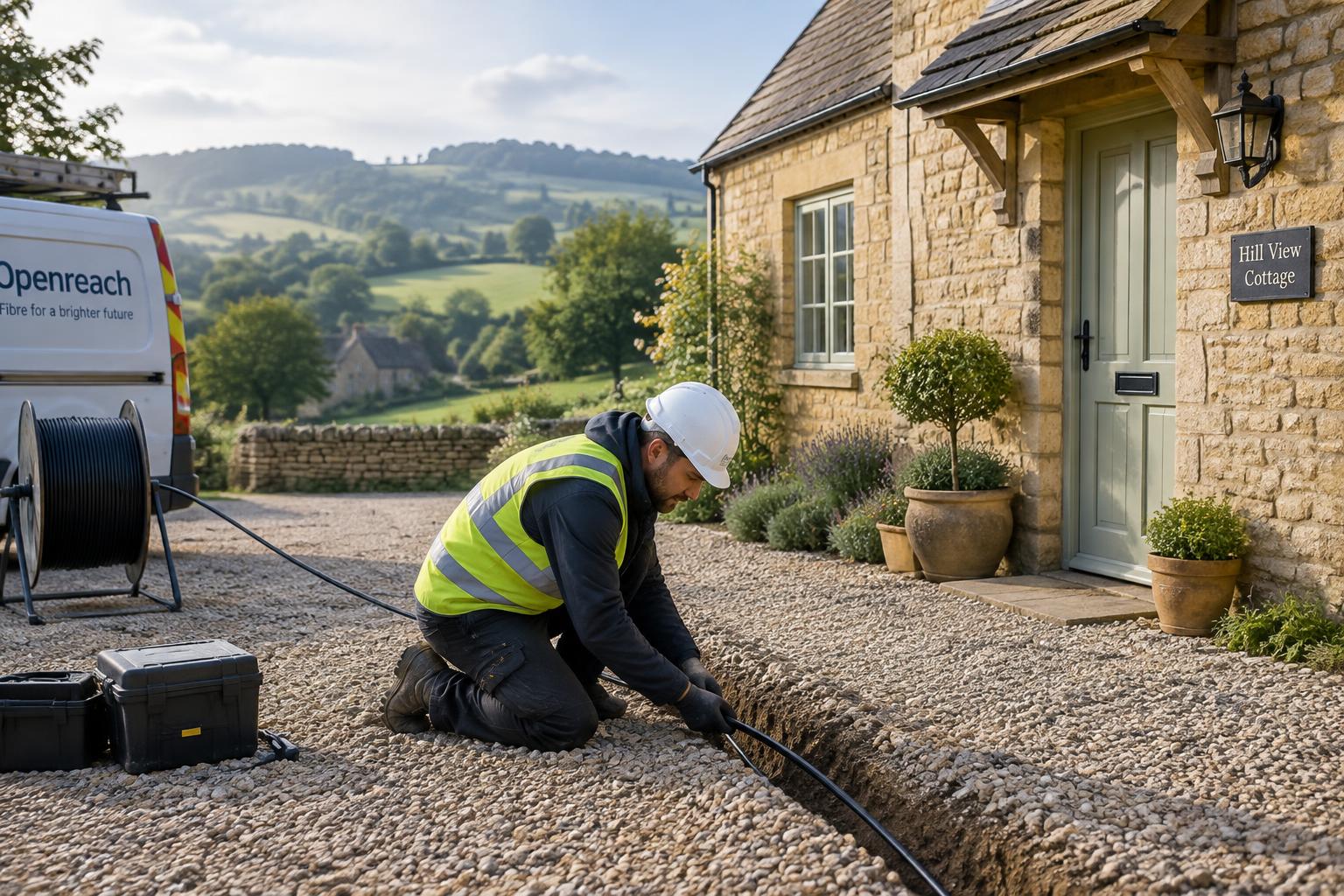
From this point, an engineer will need to run a fibre cable directly to your house. That usually involves:
The installation typically involves:
- Digging a narrow, shallow trench from the roadside access point across part of your garden or driveway.
- Installing protective ducting.
- Drilling a small hole through an external wall.
- Bringing the fibre cable into the property and connecting it to an internal fibre termination box.
While the work is generally neat and unobtrusive, it's worth being aware that some physical installation work is almost always required.
How long does installation take?
Although there is typically no upfront installation charge, fibre installation is not usually an overnight process.
From ordering the service to being connected can often take a couple of weeks, sometimes longer if additional engineering work is required. You'll also normally be asked to commit to a 24-month contract, so it's worth checking coverage and provider options before placing an order.
Don't forget the Wi-Fi
A common misconception is that installing fibre automatically guarantees excellent internet everywhere in the house.
In reality, Wi-Fi coverage is often the limiting factor, especially in larger Cotswold homes.
Traditional stone walls can significantly reduce wireless signal strength, and period properties often have thick internal walls, multiple floors and awkward layouts. As a result, many homeowners find that a single router doesn't provide reliable coverage throughout the property.
For larger homes, it's often necessary to install:
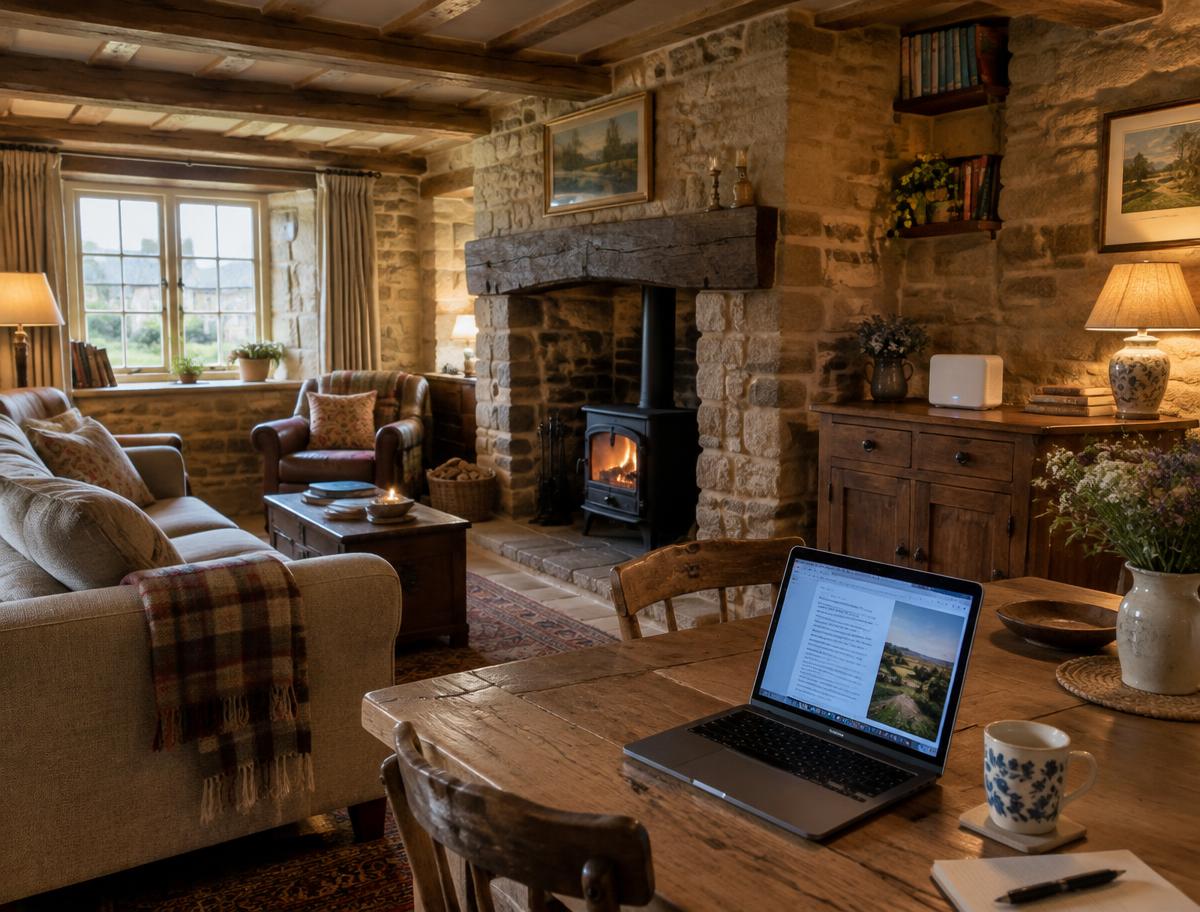
For larger homes, it's often necessary to install:
- Additional Wi-Fi access points.
- Mesh Wi-Fi systems.
- Wi-Fi extenders.
These solutions work well but can add to your monthly costs or require an upfront investment in networking equipment.
The Bottom Line
The days of painfully slow rural broadband are largely behind us, and many Cotswold villages can now enjoy genuinely fast fibre connections. However, getting connected often involves more than simply ordering online. Expect some installation work, a commitment to a longer-term contract, and potentially a little extra investment in your home's Wi-Fi network if you want fast, reliable coverage in every room.
For anyone planning a move to the area, broadband availability is well worth checking before signing on the dotted line. In today's world, it's almost as important as water and electricity.
Newsletter
Considering the move yourself?
Get weekly insights, relocation advice and hidden gems from real life in the North Cotswolds.
Join the newsletter